
The Social and Solidarity Economy (SSE) is an alternative economic model that places people and social usefulness at the heart of its concerns, over and above the profit motive. Its local roots make it a key player in local development, capable of responding to specific needs and creating social links. However, implementing the SSE for sustainable and inclusive local development raises a number of major challenges. These include
𝟏- 𝐃𝐞́𝐟𝐢𝐧𝐢𝐫 𝐞𝐭 𝐫𝐞𝐧𝐟𝐨𝐫𝐜𝐞𝐫 𝐥'𝐢𝐝𝐞𝐧𝐭𝐢𝐭𝐞́ 𝐝𝐞 𝐥'𝐄𝐒𝐒 𝐚𝐮 𝐧𝐢𝐯𝐞𝐚𝐮 𝐋𝐨𝐜𝐚𝐥
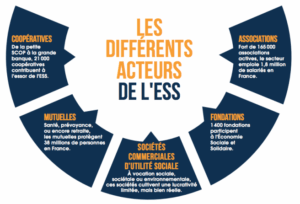
The first challenge lies in clarifying and recognising the identity of the SSE among local players (local authorities, traditional businesses, citizens). It is crucial to move beyond a sometimes marginal or purely associative vision of the SSE to highlight its diversity (cooperatives, mutual societies, associations, social enterprises) and its economic potential.
We also need to raise the profile and understanding of the fundamental principles of the SSE (limited profit-making, democratic governance, social purpose).

𝟐. 𝐅𝐚𝐯𝐨𝐫𝐢𝐬𝐞𝐫 𝐥𝐚 𝐜𝐨𝐨𝐩𝐞́𝐫𝐚𝐭𝐢𝐨𝐧 𝐞𝐭 𝐥𝐞𝐬 𝐩𝐚𝐫𝐭𝐞𝐧𝐚𝐫𝐢𝐚𝐭𝐬 𝐦𝐮𝐥𝐭𝐢-𝐚𝐜𝐭𝐞𝐮𝐫𝐬
In the era of decentralisation in Benin, local development through the SSE is intrinsically based on the ability to build fruitful collaborations between the various stakeholders. It is important to move beyond a competitive approach and encourage networking between SSE players, as well as with public authorities, traditional businesses and the grassroots population. For example, the creation of National Economic Cooperation Networks (NECNs) is an interesting approach, but requires a strong commitment and appropriate project engineering to overcome cultural barriers and power asymmetries.
3. 𝐀𝐬𝐬𝐮𝐫𝐞𝐫 𝐥𝐚 𝐯𝐢𝐚𝐛𝐢𝐥𝐢𝐭𝐞́ 𝐞́𝐜𝐨𝐧𝐨𝐦𝐢𝐪𝐮𝐞 𝐞𝐭 𝐥𝐞 𝐟𝐢𝐧𝐚𝐧𝐜𝐞𝐦𝐞𝐧𝐭 𝐝𝐞𝐬 𝐢𝐧𝐢𝐭𝐢𝐚𝐭𝐢𝐯𝐞𝐬 𝐝𝐞 𝐥'𝐄𝐒𝐒
While the social purpose is paramount, the economic viability of SSE enterprises is a sine qua non for their sustainability and their impact on local development. This undoubtedly requires the close involvement of local authorities and communities in promoting SSE initiatives.

𝟒. 𝐌𝐞𝐬𝐮𝐫𝐞𝐫 𝐞𝐭 𝐯𝐚𝐥𝐨𝐫𝐢𝐬𝐞𝐫 𝐥'𝐢𝐦𝐩𝐚𝐜𝐭 𝐬𝐨𝐜𝐢𝐚𝐥 𝐞𝐭 𝐭𝐞𝐫𝐫𝐢𝐭𝐨𝐫𝐢𝐚𝐥
The SSE as a lever for local development requires the ability to measure and value its impact beyond traditional economic indicators. Specific evaluation tools also need to be developed to take account of the creation of social links, the contribution to the ecological transition, the promotion of quality employment and the response to unsatisfied social needs.
Recognition of this "social added value" is essential for adequate political and financial support.

𝟓. 𝐑𝐞𝐧𝐟𝐨𝐫𝐜𝐞𝐫 𝐥𝐞𝐬 𝐜𝐚𝐩𝐚𝐜𝐢𝐭𝐞́𝐬 𝐞𝐭 𝐥𝐚 𝐩𝐫𝐨𝐟𝐞𝐬𝐬𝐢𝐨𝐧𝐧𝐚𝐥𝐢𝐬𝐚𝐭𝐢𝐨𝐧 𝐝𝐞𝐬 𝐚𝐜𝐭𝐞𝐮𝐫𝐬 𝐝𝐞 𝐥'𝐄𝐒𝐒
Developing SSE at local level requires specific skills in social project management, participative governance, partnership development and impact assessment. A key challenge is to build the capacity of SSE players by training, supporting and professionalising their teams. Supporting the creation of local support and engineering systems is essential.

𝟔. 𝐈𝐧𝐬𝐜𝐫𝐢𝐫𝐞 𝐥'𝐄𝐒𝐒 𝐝𝐚𝐧𝐬 𝐥𝐞𝐬 𝐏𝐨𝐥𝐢𝐭𝐢𝐪𝐮𝐞𝐬 𝐏𝐮𝐛𝐥𝐢𝐪𝐮𝐞𝐬 𝐋𝐨𝐜𝐚𝐥𝐞𝐬
For the SSE to become a real driver of local development, it must be fully integrated into local strategies and public policies, such as the fourth-generation Municipal Development Plan (PDC4). This implies strong political recognition, the introduction of appropriate support mechanisms (specific calls for projects, taking account of the specific characteristics of the SSE in public contracts, etc.) and the involvement of SSE players in local decision-making bodies. The challenge is to move from a one-off support approach to the structural integration of the SSE into development policies.
In conclusion, the Social Solidarity Economy holds considerable potential for fairer, sustainable and inclusive local development. Tackling the challenges linked to its definition, cooperation, financing, impact measurement, capacity building and integration into public policies is essential if this potential is to be fully released to serve local areas.